

For years, the message that followed Faron Haase whenever he told someone what he was studying was that he would have no trouble finding a job.
There was good reason for that assumption, too. He was majoring in special education, an area where schools have historically struggled to find enough qualified teachers. And long before he was ready to graduate from Missouri State University, school districts were already looking for him.
At the university’s annual career fair, for example, districts traveled from as far away as California, Nevada, Tennessee, Kentucky, and Pennsylvania to recruit prospective teachers. Recruiters began talking to him when he was a freshman. Districts contacted him through LinkedIn while he was still an undergraduate, and at the schools where he completed his practicums, informal job offers became almost routine.
“I can’t explain how constant it was,” Haase says.
By the time he was actually prepared to enter the classroom, the attention was both reassuring and unsettling. He knew there was demand for special education teachers, but he also wanted to know that a school wanted him because of what he could bring to students—not just to fill a vacancy.
“If I apply and I get a job offer from every single place I go,” he wonders, “is it the fact that I’m available or is it because I am qualified?”
The national numbers are significant. A 2026 Learning Policy Institute analysis found:
In Demand Before Graduation
Haase ultimately narrowed his search to about seven cities where he could see himself living. Only then did he compare salaries, retirement benefits, and support for beginning teachers. He is now a first-year special education teacher at Delta Woods Middle School, in Missouri.
Having options allowed him to be thoughtful about where he started his career. During interviews, he asked principals how they felt about their staffs and paid close attention to their answers. He wanted a school that valued the quality of its educators.
As offers and recruiting interest accumulated, Haase began questioning what they represented. The abundance of opportunities was reassuring, but he wanted to know that employers saw him as a capable educator instead of an available special education teacher.
That meant learning to trust his own preparation. As his first school year began, he reminded himself that he had completed the coursework and training required to enter the profession.
“I am qualified for this job,” he says, describing how he has worked through some of that uncertainty.
And despite the challenges that can make teaching positions difficult to fill, the work itself has affirmed why he chose education in the first place. Haase originally entered college as a business major but switched after realizing teaching was the more fulfilling path. Teachers had been some of the most important role models in his life, he says, and he wanted to become that person for someone else.
More Applicants, Fewer Openings

For Hannah St. Clair, a first-year, fourth-grade teacher in Maryland, the search looked very different.
She began applying in February and March 2026 after earning her teaching license in Oregon. At first, she considered Illinois. Salary comparisons, however, led her to focus on Maryland, where she could earn pay comparable to what she had been making in her previous job.
But knowing where she wanted to work didn’t mean a job came quickly.
Budget uncertainty in Montgomery County had her hearing that schools might hire fewer first-year teachers. May became June, then June became July. Applications were followed by automated rejections. She expanded her search to Prince George’s County and D.C.
Eventually, in July, two Montgomery County elementary schools called her for interviews. She accepted a fourth-grade position only about two weeks before school began.
“It was a chaotic six months,” St. Clair says.
The contrast was striking because she could see plenty of openings—just not necessarily for the job she wanted.
During her search, special education and math positions repeatedly appeared, along with other departmentalized subjects. General elementary positions could be more difficult, she says, because there were fewer openings and larger candidate pools.
“If you know that you want to work with special education programs or if you know that you want to be a specific-subject focused [teacher],” she says, opportunities can look very different depending on the schools and communities around you.
She also noticed language positions in both Illinois and Maryland, including openings at immersion schools for educators who could teach languages such as Spanish, French, Mandarin, and Arabic.
Although she has an English for speakers of other languages endorsement, she didn’t pursue English language development positions because she had not completed practicum experience in that area. The demand was there, but she still had to ask herself, “Am I really ready and prepared to be that teacher?”
Vacancies Across Subjects
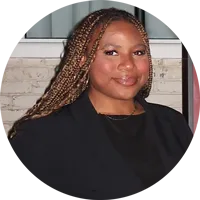
In South Carolina, Camryn Jordan had almost the opposite experience from St. Clair.
An elementary education major who attended college in Florida and served as the president of the Student Florida Education Association, she initially imagined staying there. By graduation, pay became one factor that pushed her toward South Carolina, where her family lives.
Once she started looking, openings weren’t hard to find.
“Honestly, everybody was hiring,” Jordan says. “I didn’t feel like I struggled looking for an open position.”
Licensed for kindergarten through sixth grade, she applied to both elementary and middle schools and ultimately accepted a middle school position. What stood out was how many secondary vacancies she encountered.
She saw math and science openings, but also English positions. Her own school began the year missing one sixth-grade English teacher, along with a science teacher and social studies teacher. The English position remains vacant.
Finding the Right Fit
Jordan’s preparation gave her an advantage when it came to look for a job. Student teaching and substitute teaching provided experiences she could draw on during interviews and made her more confident talking about classroom practice. Her Aspiring Educators (AE) program offered interview preparation, which helped her feel more prepared for the hiring process.
Her advice to future teachers is to gain as much real school experience as possible before beginning the job search.
“Apply for a job at a school, become a sub or a paraprofessional,” she says, because it provides experience future teachers may not get from education courses alone.
St. Clair also turned to her professional networks for guidance throughout her job search. Her peers, union contacts, and educators already working in Montgomery County helped her navigate licensure, refine her resume, understand individual school cultures, and make sense of a hiring process that often felt cloudy.
School culture eventually became an important part of her decision to accept a position at Harmony Hills Elementary School. What she learned about the school gave her greater confidence that the position would be a good place to start her career.
Haase also found support through his AE connections. As the only first-year teacher in his building, having friends who were also navigating their first year gave him a community of people who understood the experience.
For future educators, the experiences of all three first-year teachers point toward a more nuanced way of thinking about the teacher shortage.
A shortage somewhere doesn’t mean a vacancy everywhere. A candidate looking for an elementary classroom may face competition while, in the same district, schools scramble for special education, math, science, language, or other specialized teachers. Geography can matter as much as certification. Salary, benefits, school culture, and support for beginning teachers can matter as much as the number of openings.
And flexibility can expand the possibilities.
St. Clair entered her search convinced she knew what she wanted. Months of applications, interviews, and changing possibilities taught her otherwise.
“Be open to your mind being changed,” she says. “It’s OK if you [go] back and forth.”
